
Sports Nutrition • Evidence-Based Guide
Creatine: The Ultimate Guide to This Top-Tier Fitness Supplement
Creatine: The Ultimate Guide to This Top-Tier Fitness Supplement

If you follow fitness nutrition and supplements, you must have heard of creatine. It is one of the most widely used and popular sports nutrition supplements worldwide, consistently ranking among the top three when it comes to nutritional aids.

1. Core Benefits of Creatine: What It Does for You

Creatine’s primary function is to boost water storage in your muscles, directly improving three key areas:

- Muscle strength: Enhances performance during heavy-weight training such as squats and bench presses.
- Muscle fullness: Water retention in muscle cells increases cell volume for a fuller, more defined appearance.
- Athletic performance: Accelerates ATP (adenosine triphosphate) regeneration, delivering instant energy for high-intensity, explosive workouts.

Thanks to these properties, creatine suits nearly all strength-based and explosive sports—including football, basketball, rugby, 100-meter sprints, high jump, long jump, and more. Both professional athletes and recreational fitness enthusiasts can benefit significantly.

2. Types of Creatine: Choose Wisely for Maximum Results

Contrary to common belief, creatine is not a single-form supplement. Advances in nutritional science have produced multiple upgraded variants.

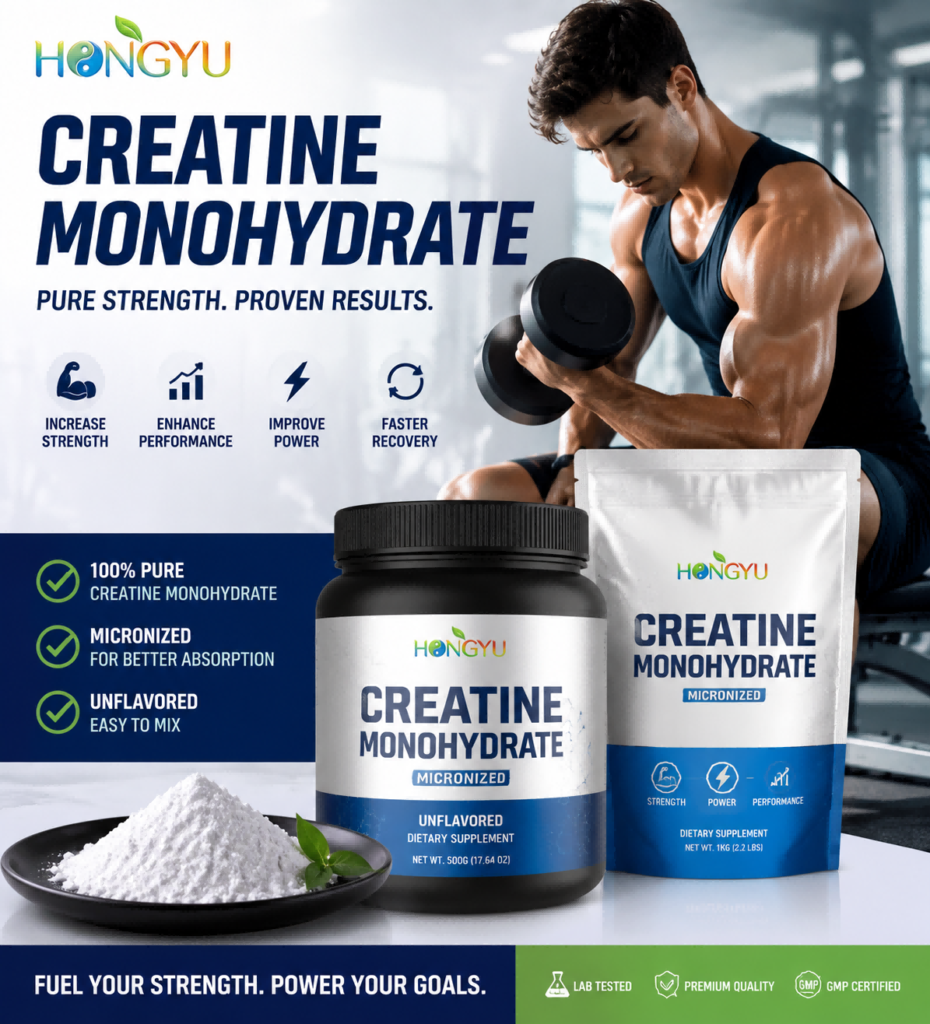
Creatine Monohydrate

The original, most researched, and well-established form of creatine.

- Pros: Proven effectiveness, lowest price, excellent cost-performance ratio
- Cons: Noticeable muscle water retention; may reduce muscle definition with long-term use

Creatine Hydrochloride (HCL)

A popular upgraded version of creatine monohydrate in recent years.

- Pros: Faster absorption, higher bioavailability, minimal water retention, preserves muscle definition during fat loss phases
- Cons: Relatively higher price

How to choose:
Pick creatine monohydrate if you prioritize cost-effectiveness and do not mind temporary water retention. Choose creatine hydrochloride if you demand strict muscle definition and have a higher budget.

3. Unique Rules for Using Creatine

⚠️ Critical Note: Avoid Caffeine
Creatine works via water retention, while caffeine is a powerful diuretic. Taking them together drastically reduces creatine’s effectiveness. If you drink black coffee or caffeinated pre-workout drinks before training, separate intake by at least one hour.

🍬 Always Pair with Carbohydrates
This is the most overlooked rule of creatine use. Sugars help shuttle creatine into muscle tissue; without carbs, most creatine is excreted in urine and wasted.
Optimal ratio: Creatine : Sugar = 1 : 7
Dextrose powder is highly recommended for its low cost and fast absorption. Table sugar, honey, or commercial sports drinks are suitable alternatives.

4. Two Main Dosage Protocols

Method 1: Cycling Protocol (Fast-acting, Recommended)

Ideal for users seeking rapid gains in strength and muscle size.

- Loading Phase: 7 days | 20g daily (approx. 4 scoops of 5g each)
- Maintenance Phase: 4–6 weeks | 5g daily (approx. 1 scoop)
- Rest Phase: 1–2 weeks | 0g daily

Repeat the cycle after the rest period to restore natural creatine synthesis and sustain long-term effects.

Method 2: Simplified Daily Use (Low-effort, Easy to Sustain)

Take a fixed 5g daily with no cycling required, suitable for users who prefer simplicity and steady long-term results.

For both methods: Consistent training is mandatory.

5. Can You Take Creatine During Fat Loss?

Short answer: Yes — and it is highly recommended.

Many worry creatine’s water retention will make them look bloated during a cut. A key distinction:
Water retention ≠ weight gain. Extra water ≠ extra fat.
While temporary subcutaneous water may slightly soften muscle definition, creatine delivers major fat-burn benefits:
Better workout performance → higher training intensity → more calories burned → faster fat loss.
If you can tolerate mild temporary fullness, creatine is a powerful fat-loss ally.

6. Exact Timing for Maximum Absorption

Poor timing drastically lowers creatine uptake. Follow these precise guidelines:

Pre-workout Intake (Recommended for loading or maintenance phases)

Best window: 30–60 minutes before training
Creatine requires 30+ minutes to digest, enter the bloodstream, and reach muscle cells. Taking it right before training means it remains undigested in your stomach and cannot work during your session.
Separate creatine and caffeine intake by at least one hour (e.g., creatine 60 mins pre-workout, caffeine 30 mins pre-workout).

Post-workout Intake (Alternative recommended option)

Best window: Within 30 minutes after training
Increased post-workout blood flow boosts absorption. Pair with meals or whey protein, plus carbohydrates (dextrose, sports drinks, etc.) to maximize muscle uptake.

Loading Phase Daily Schedule (4 doses = 20g total)

- After breakfast: 5g (with carbs)
- 30–60 mins pre-workout: 5g (separated from caffeine)
- Within 30 mins post-workout: 5g (with protein or dextrose)
- Before bed: 5g (with a small amount of carbs such as honey water)

Maintenance Phase Daily Schedule (5g total)

- First choice: Within 30 mins post-workout with protein or sugary drinks
- Second choice: With any meal, paired with carbs at a 1:7 ratio

Common Mistakes to Avoid

- ❌ Taking creatine 5 minutes before training (too late for absorption)
- ❌ Dry-scooping on an empty stomach (very low absorption rate)
- ❌ Taking creatine without carbs (most is wasted in urine)
- ❌ Concurrent intake with caffeine (mutually counteracts effects)

Simple rule to remember: Take creatine 30–60 minutes pre-workout or within 30 minutes post-workout, always paired with carbohydrates. Stick to these two windows to avoid wasting your dose.

Final Thoughts

Creatine is no fancy gimmick or miracle supplement. It is a well-researched, safe, evidence-backed foundational fitness nutrient.
No theory works without action. If you are curious about creatine, follow this science-backed dosage and timing protocol alongside regular training for 4–6 weeks — and prepare to be impressed by your results.