
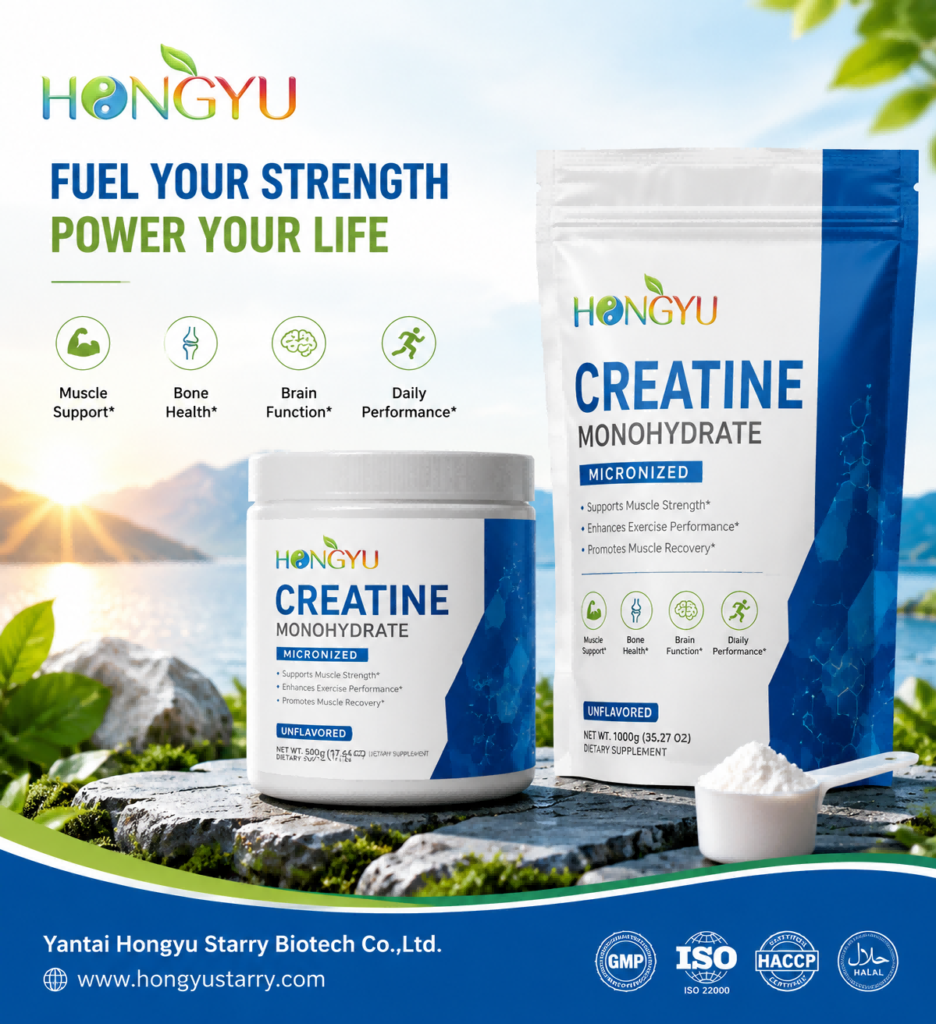
Creatine: The Fuel Your Muscles, Bones, and Brain Need
1. Why Your Muscles Are Your “Longevity Capital”
Here’s a little-known fact: after the age of 30, people lose 3%-8% of their muscle mass every decade. After 60, this loss accelerates. In medicine, this is called sarcopenia. Losing muscle doesn’t just make you weaker—it lowers your metabolism, makes blood sugar harder to control, weakens bones, and even accelerates brain aging.
Why? Because muscles are not just “movement organs.” Muscles are enormous endocrine factories. They secrete hundreds of signaling molecules (myokines) that communicate directly with your brain, immune system, and bones. When muscle mass decreases, this factory produces less—the body’s “repair signals” are diminished across multiple systems.
As the anti-aging community often says: muscle is a longevity organ. And creatine is the core fuel of this longevity organ.
2. What Is Creatine? — A “Savings Account” Analogy
Let me use an analogy. Every cell in your body needs energy to function. This energy is called ATP (adenosine triphosphate)—think of it as your pocket change. It’s enough for daily expenses, but if a sudden demand arises (standing up quickly, climbing stairs), it gets spent instantly.
Fortunately, your body is smart. It has a “checking account”—this is phosphocreatine (PCr). When your muscles need a burst of power, the ATP pocket change is quickly depleted. Phosphocreatine instantly converts from the “checking account” into ATP, providing immediate energy.
Creatine is the principal you deposit into this account. The more principal you have, the more your checking account is stocked. Sudden energy demands become easier to handle.
The problem is—your body has a limited supply of creatine. Humans synthesize about 1 gram per day, primarily in the liver and kidneys. You also get a small amount from foods like red meat and fish. But if you’re vegetarian, older, or eat less meat, creatine intake may be insufficient.
A 2025 review in the Journal of the International Society of Sports Nutrition (JISSN) reported that 70% of adults over 65 consume less than 0.95 g/day of creatine from food, based on dietary surveys [1]. In other words, many older adults are running low on their “capital.”
3. From Cells to Humans: How Creatine Fights Aging — Three Layers of Evidence
You might wonder: is there evidence? Yes—and it spans from cellular mechanisms to human clinical trials.
🧬 Layer 1: Cellular Mechanisms
Creatine helps cells maintain energy supply. Think of your cells’ mitochondria as power plants: when fuel is sufficient, they operate smoothly, and waste (free radicals) is cleared efficiently. Insufficient fuel leads to oxidative damage—a key driver of aging. Creatine is critical for maintaining this fuel supply.
🐭 Layer 2: Animal Studies
A 2026 review in Frontiers in Nutrition summarized multiple animal studies (Li N, 2026). One study found that older male rats supplemented with creatine plus resistance training showed improved lipid metabolism, higher antioxidant enzyme activity, restored neuromuscular junctions, and better muscle histology [2]. In short, the muscles of older rats returned to a more youthful state with creatine + training.
🏃 Layer 3: Human Clinical Trials
This is the most important layer. Multiple randomized controlled trials (RCTs) have confirmed creatine’s benefits in older adults:
- Muscle and Strength: Creatine combined with resistance training improved lean mass, lower-body strength, and functional performance (e.g., sit-to-stand tests) significantly more than training alone. Longest follow-up trials lasted 6 months, with creatine + training showing sustained gains [2].
- Bone Health: Creatine supplementation has been associated with increased bone area and thickness, with potential clinical relevance for osteoporosis [1].
- Brain Health: A meta-analysis of 16 trials with 492 participants found that creatine positively affected memory (SMD = 0.31), and in 66-76-year-old adults, the effect size was SMD = 0.88 [2]—considered a “large effect” in medical statistics. For comparison, younger adults’ memory effect was only 0.03.
Note: the current evidence level is still “moderate to low,” and larger prospective studies are needed. However, the trend is clear.
4. Why Has Creatine Been Underestimated for So Long?
Before writing this, I hesitated—because creatine has long suffered from two major misconceptions:
Misconception 1: “Creatine harms the kidneys.” This is a classic myth. High-quality research repeatedly shows that long-term creatine supplementation (3-5 g/day) is safe for people with normal kidney function [1][2]. ISSN even lists creatine as one of the most studied and safest sports supplements.
Misconception 2: “Creatine causes bloating and weight gain.” Creatine does increase water storage in muscle cells (“cellular hydration”), but this is not subcutaneous bloating—it’s a positive effect. Well-hydrated cells are more metabolically efficient. Creatine does not directly increase fat.
5. How to Take Creatine — Three Options
🥇 Premium Plan (Maximum Effect)
- Loading phase: 0.3 g/kg body weight per day (~20 g/day for a 70 kg adult), divided into 4 doses, 5-7 days
- Maintenance phase: 3-5 g/day
- Exercise: 2-3 resistance training sessions per week (squats, presses, resistance bands), 30-40 minutes each
🥈 Standard Plan (Most Recommended)
- No loading phase: 3-5 g/day, reaching muscle saturation in ~4 weeks
- Exercise: at least 2 strength sessions per week (home resistance bands are fine)
- Form: creatine monohydrate — cheapest, most studied, and most reliable
🥉 Beginner Plan (Minimal Effort)
- Diet: eat red meat 3+ times/week, fish 2+ times/week
- Supplement: if dietary intake is insufficient, 2-3 g/day
- Exercise: 30 min brisk walking daily + 1 resistance session/week
Even without heavy training, dietary creatine is better than nothing. Creatine works best with exercise—without it, effectiveness is halved.
“Creatine may not make you younger, but it can help your muscles, bones, and brain better withstand the challenges of aging—allowing you to stay stronger, sharper, and more active for longer.”
Yantai Hongyu Starry Biotech Co.,Ltd. | www.hongyustarry.com