
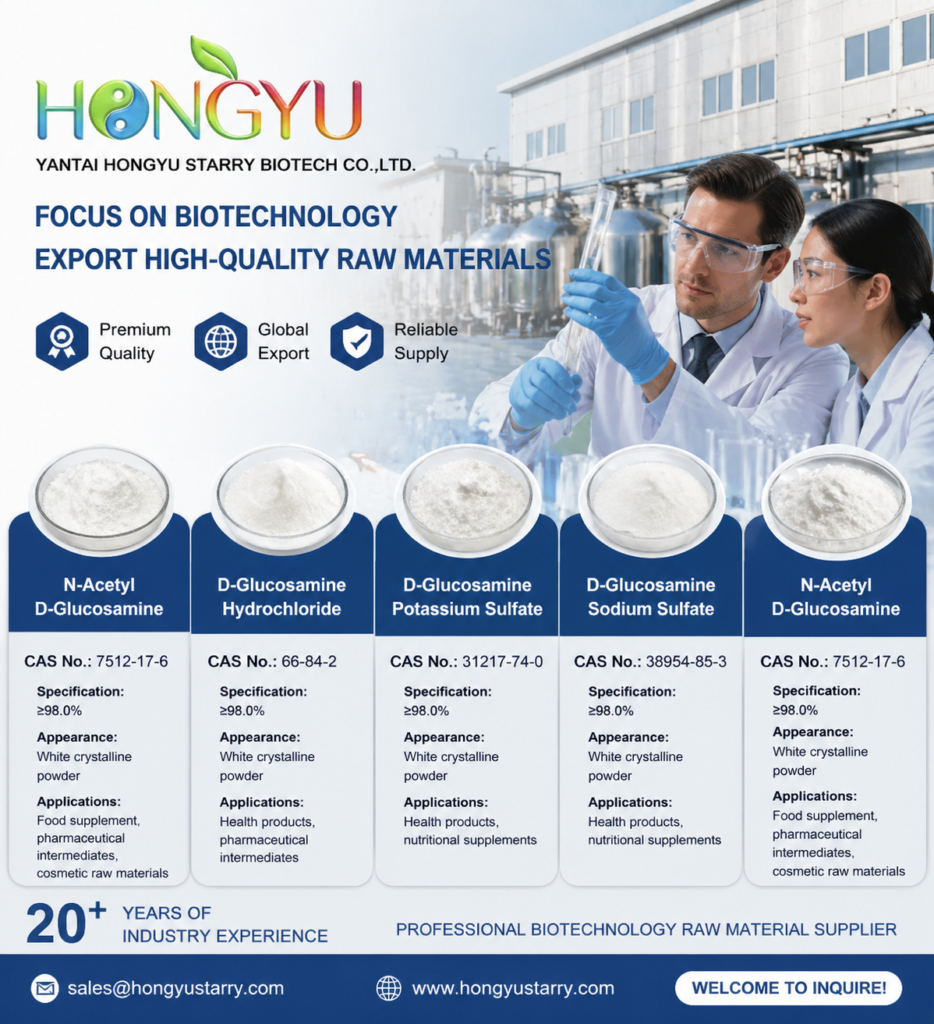
1. N‑Acetylglucosamine (NAG) — A Next‑Generation Precursor for Cellular Health
N‑Acetylglucosamine (CAS: 7512‑17‑6) represents the acetylated form of glucosamine, an essential monosaccharide involved in glycosaminoglycan (GAG) synthesis and cellular signaling pathways. Unlike standard glucosamine, NAG exhibits enhanced stability and bioavailability and serves as a critical substrate in the biosynthesis of hyaluronic acid, chitin, and N‑linked glycoproteins — key components of extracellular matrices and connective tissues.
Mechanism & Application:
NAG supports joint comfort and cartilage resilience by supplying acetyl groups that facilitate chondrocyte metabolism and extracellular matrix integrity. Scientific reports suggest that supplementation influences O‑GlcNAcylation pathways, which are linked to cellular stress responses and may modulate inflammatory signaling (Bond & Hanover, Annu Rev Nutr. 2015).
Key Benefits
- Supports structural matrix synthesis (hyaluronic acid, proteoglycans)
- Enhances natural repair processes of connective tissues
- Facilitates cellular resilience via glycoprotein synthesis pathways
Industries: Nutraceuticals, Cosmetics (anti‑aging formulations), Functional foods
2. Glucosamine Hydrochloride (GlcN·HCl) — The Industry Standard for Joint Support
Glucosamine Hydrochloride (CAS: 66‑84‑2) is one of the most clinically recognized forms of glucosamine, widely used in dietary supplements to support joint function and comfort.
Mechanism & Application:
Glucosamine is the natural building block for cartilage glycosaminoglycans (GAGs), which maintain the hydration and elasticity of joint surfaces. Clinical studies have demonstrated that regular GlcN·HCl intake can contribute to reduced joint discomfort and improved mobility in aging populations (Reginster et al., NEJM, 2001).
Key Benefits
- Supports cartilage matrix synthesis
- Promotes joint mobility and comfort
- Well‑tolerated and extensively researched
Industries: Joint health nutraceuticals, functional tablets & capsules
3. Glucosamine Potassium Sulfate — Enhanced Bioavailability with Sulfate Synergy
Glucosamine Potassium Sulfate (CAS: 38899‑05‑7) combines glucosamine with a potassium salt of sulfate — a cofactor required for glycosaminoglycan (GAG) sulfation. Sulfation is essential for aggrecan function, the dominant cartilage proteoglycan responsible for load‑bearing.
Mechanism & Application:
Sulfate groups are critical for cartilage hydration and resilience. Combining glucosamine with potassium sulfate may support enhanced sulfation activity, facilitating the formation of biologically active proteoglycans — a foundational aspect of joint matrix architecture.
Key Benefits
- Synergistic support for cartilage sulfation pathways
- Encourages optimal proteoglycan formation
- Suitable for advanced joint matrix formulations
Industries: Premium joint support blends, sports recovery supplements
4. Glucosamine Sodium Sulfate — Proven Cartilage Matrix Enhancer
Glucosamine Sodium Sulfate (CAS: 29031‑19‑4) provides a highly bioavailable source of both glucosamine and sulfate, essential to the synthesis of sulfated glycosaminoglycans that underpin cartilage strength and elasticity.
Mechanism & Application:
Clinical evidence supports the efficacy of glucosamine sodium sulfate in maintaining cartilage volume and joint space compared to placebo (Uitterlinden et al., Osteoarthritis Cartilage, 2010). The sodium salt form enhances solubility and stability in aqueous formulations, making it ideal for capsules, powders, and liquid supplements.
Key Benefits
- Supports long‑term joint comfort and cartilage health
- Readily assimilated form with high stability
- Well suited for combination with chondroitin and MSM
Industries: Complete joint‑support supplement systems
5. N‑Acetyl‑D‑Glucosamine — Functional Support for Gut & Immunity Interfaces
N‑Acetyl‑D‑Glucosamine (CAS: 1250‑30‑0) is the N‑acetylated analog of glucosamine often incorporated for specialized functional effects beyond joint support. It plays a role in gut mucosal integrity, immune modulation, and glycosylation pathways.
Mechanism & Application:
Research indicates that N‑Acetyl‑D‑Glucosamine may contribute to mucosal layer homeostasis and the maintenance of epithelial barriers — mechanisms critical in digestive wellness and systemic immune responses (Camilleri, Gastroenterology, 2017).
Key Benefits
- Supports gastrointestinal mucosal health
- Participates in immune and cellular signaling pathways
- Valuable ingredient for gut‑brain axis and wellness formulations
Industries: Digestive health products, specialized nutraceuticals
Why Choose YANTAI HONGYU STARRY BIOTECH CO., LTD.
At YANTAI HONGYU STARRY BIOTECH CO., LTD., we are committed to providing pharmaceutical‑grade raw materials with consistent quality, rigorous testing, and traceable supply chains — empowering manufacturers to innovate in joint health, mobility, and functional wellness markets worldwide.
🔗 Website: www.hongyustarry.com
📧 Contact: sales@hongyustarry.com